+90 538 279 69 38
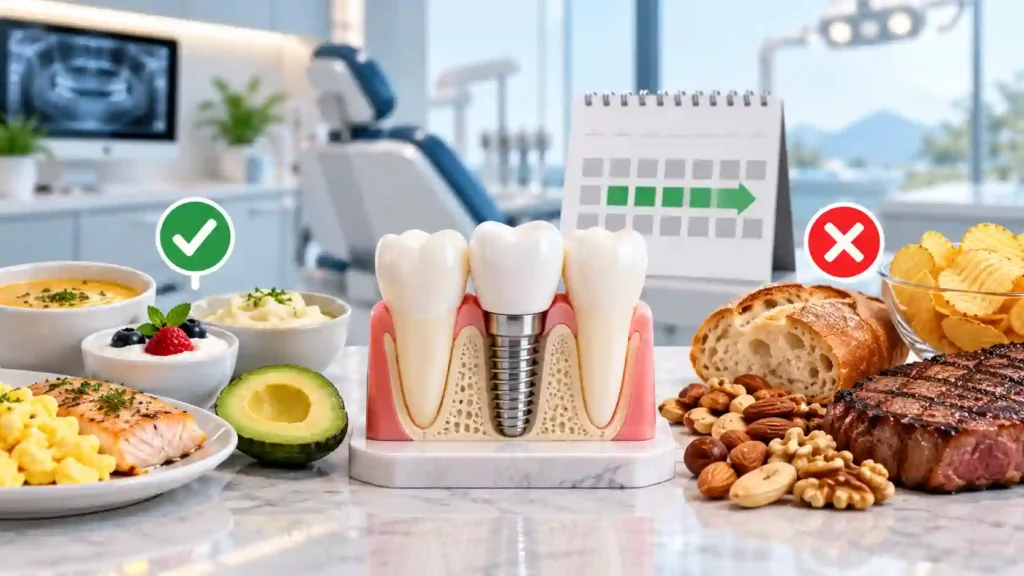
Dental implant surgery is an important step in replacing missing teeth, but the healing process continues long after the procedure is completed. One of the most common questions patients ask is, “When can I eat hard foods after dental implant surgery?”
If you enjoy crunchy snacks, nuts, steak, or other foods that require strong chewing, you may be wondering when you can safely return to your normal diet.
The answer depends on several factors, including the number of implants placed, the condition of your jawbone, whether additional procedures were performed, and how your mouth is healing.
For international patients researching dental implant treatment in Turkey, understanding what to eat after dental implant surgery is an important part of preparing for recovery.
At Dental Clinic Turkey in Kayseri, postoperative recommendations are based on each patient’s clinical condition and treatment plan. There is no single recovery timeline that applies to everyone.
When Can You Eat Hard Foods After Dental Implant Surgery?
Hard foods should generally be avoided during the early healing period after dental implant surgery.
Foods that require strong chewing can place pressure on the surgical area and may interfere with the healing process, particularly when the implant or surrounding tissues are still recovering.
Many patients begin with soft foods and gradually return to firmer textures as healing progresses.
However, there is no universal number of days or weeks after which hard foods become safe for every dental implant patient.
The appropriate timing depends on the surgical procedure, implant stability, surrounding bone, soft tissue healing, and whether a temporary or final restoration is present.
A patient who has received a single dental implant may have different dietary requirements from someone who has undergone full-mouth dental implant surgery or additional bone grafting.
Before returning to hard foods, patients should follow the instructions provided by their implant dentist or surgical team.
What to Eat After Dental Implant Surgery
Choosing appropriate foods after dental implant surgery can help reduce unnecessary pressure on the surgical area.
During the initial recovery period, softer foods that require minimal chewing are commonly recommended.
Depending on individual instructions, suitable options may include:
-
Yogurt
-
Scrambled eggs
-
Mashed potatoes
-
Soft oatmeal
-
Smooth soups that are not too hot
-
Soft cooked vegetables
-
Mashed bananas
-
Soft pasta
-
Cottage cheese
-
Soft fish
-
Well-cooked rice, when appropriate
-
Other foods that can be eaten without forceful chewing
Food temperature is also important immediately after surgery. Very hot foods and beverages may be discouraged during the early postoperative period.
Patients should follow their surgical team’s instructions regarding when to begin eating, which textures are appropriate, and whether chewing should be limited to a particular side of the mouth.
Foods to Avoid After Dental Implant Surgery
Certain foods may place excessive pressure on the surgical area or create difficulties during the early healing period.
Examples of foods commonly restricted after implant surgery include:
-
Hard nuts
-
Popcorn
-
Hard candy
-
Crunchy chips
-
Hard bread crusts
-
Tough meat
-
Raw carrots
-
Hard crackers
-
Chewy candy
-
Sticky foods
-
Foods containing small, hard seeds
These foods may require considerable chewing force or may leave particles around the surgical site.
The duration of these restrictions varies depending on the treatment.
Patients should not assume that a food becomes safe simply because postoperative pain or swelling has decreased.
The healing of the surrounding tissues and the stability of the implant are important considerations.
Dental Implant Recovery Diet: What to Expect
A dental implant recovery diet usually changes gradually as healing progresses.
Rather than returning immediately to normal eating habits, patients may move through different dietary stages.
The First 24 Hours After Dental Implant Surgery
During the first day, the surgical area may be sensitive.
Soft, cool or lukewarm foods that require little chewing are commonly recommended once eating is permitted by the treatment team.
Patients may need to avoid hot foods, hard textures, and anything that could irritate the surgical area.
If sedation or anesthesia was used, additional instructions may apply.
The main objective during this stage is to avoid unnecessary pressure or irritation while following the postoperative care plan.
The First Few Days After Implant Surgery
During the following days, swelling, tenderness, or mild discomfort may still be present.
Soft foods generally remain important.
Patients may gradually introduce additional foods that are easy to chew, depending on their recovery and the instructions provided by their dentist.
However, crunchy, sticky, and hard foods may still be restricted.
Even when discomfort begins to improve, the implant site continues to heal.
The Following Weeks
As the soft tissues recover, patients may be able to expand their diet.
However, this does not automatically mean that the implant is ready to withstand strong chewing forces.
The jawbone continues to undergo biological healing around the implant.
This process is known as osseointegration.
The timing of returning to firmer foods depends on the individual treatment plan, the condition of the implant, and whether the patient has a temporary or definitive restoration.
After the Healing Period
Once the implant has been evaluated and the appropriate restorative stage has been completed, patients may be able to return to a broader range of foods.
However, the exact timing and chewing recommendations depend on the implant and restoration.
A patient with a definitive implant-supported crown may receive different instructions from someone wearing a temporary full-arch restoration.
For this reason, returning to hard foods should be based on clinical evaluation rather than a fixed calendar date.
When Can I Eat Normally After a Dental Implant?
Another frequently searched question is, “When can I eat normally after dental implant surgery?”
Normal eating means different things to different people.
For some patients, it means returning to regular meals such as pasta, vegetables, and soft meat.
For others, it means being able to chew nuts, crunchy bread, or steak without restrictions.
These are not necessarily the same stages of recovery.
A patient may be able to eat a wider variety of soft and moderately firm foods before being ready to chew particularly hard foods.
The timing depends on implant healing, the surgical procedure, and the type of restoration.
Patients should therefore distinguish between returning to a more varied diet and receiving clearance for strong chewing directly over an implant.
When Can I Eat Crunchy Foods After Dental Implant Surgery?
Crunchy foods are among the most commonly questioned foods during dental implant recovery.
Chips, crackers, popcorn, and hard bread may require repeated chewing and can produce small particles.
During early healing, these foods may irritate the surgical area or place pressure on tissues that are still recovering.
For this reason, crunchy foods are generally restricted until the treating dentist determines that they are appropriate.
Patients should not use the absence of pain as the only indication that they can safely eat crunchy foods.
When Can I Eat Nuts After Dental Implant Surgery?
Nuts can require significant chewing force, particularly when they are hard or roasted.
For patients recovering from implant surgery, this pressure may be inappropriate during the early stages of healing.
Even if chewing on the opposite side is possible, dietary restrictions may still apply depending on the procedure.
The safest time to reintroduce nuts depends on the patient’s recovery and the recommendations of the surgical team.
Patients with temporary implant-supported restorations may also need to follow specific chewing restrictions.
When Can I Eat Steak After Dental Implant Surgery?
Steak and other tough meats can require strong and repeated chewing.
For this reason, they may not be suitable during the early postoperative period.
Softer protein sources, such as eggs, tender fish, or other easy-to-chew foods, may be considered during recovery.
As healing progresses, patients may gradually return to firmer foods when clinically appropriate.
However, the ability to chew steak comfortably should not be used as a test of implant stability.
The timing should follow the patient’s individual postoperative instructions.
Can I Chew on the Side of My Dental Implant?
Chewing directly over a recently placed implant may be restricted during the early healing period.
The exact recommendation depends on whether the implant is covered by healing tissue, has a healing abutment, or supports a temporary restoration.
Some patients may be instructed to chew on the opposite side of the mouth.
Others, particularly those with multiple implants or full-arch restorations, may require more extensive dietary modifications.
The important point is that chewing instructions are specific to the surgical and restorative treatment performed.
Patients should not assume that a visible temporary tooth can immediately withstand the same chewing forces as a natural tooth.
Why Are Hard Foods Restricted After Dental Implant Surgery?
Dental implants depend on a biological healing process involving the surrounding bone.
After an implant is placed, the bone gradually establishes a stable connection with the implant surface.
Excessive mechanical forces during the healing period can be a concern, particularly when an implant is being loaded before complete osseointegration.
Hard foods may also place pressure on sensitive soft tissues or temporary restorations.
Dietary restrictions are therefore intended to protect the surgical area and support the planned healing process.
The level of restriction depends on the implant procedure, stability, restoration, and other clinical factors.
Dental Implant Stages and Eating Restrictions
Dental implant treatment may involve several stages.
These can include initial examination, diagnostic imaging, extraction when necessary, implant placement, healing, and prosthetic restoration.
Some patients may also require bone grafting or other additional procedures.
Each stage can influence the treatment timeline and dietary instructions.
For example, a patient who receives an implant without an immediate crown may have different chewing restrictions from someone who receives an immediately loaded temporary restoration.
This is why dental implant aftercare should always be considered together with the specific treatment stages.
Eating After a Single Dental Implant vs Full-Mouth Dental Implants
The number of implants placed can affect postoperative dietary recommendations.
Single Dental Implant
A patient receiving one implant may be able to use other areas of the mouth for chewing, depending on the procedure and their oral condition.
However, direct pressure on the surgical area may still need to be avoided.
The timing of normal chewing depends on healing and the planned restoration.
Multiple Dental Implants
When several implants are placed, chewing restrictions may involve a larger area of the mouth.
Patients may need to maintain a soft-food diet while the surgical sites recover.
The recommendations depend on the location and number of implants.
Full-Mouth Dental Implants
Patients undergoing full-mouth dental implant treatment may require a more structured postoperative diet.
This is particularly important when temporary implant-supported restorations are placed.
Even if temporary teeth are provided shortly after surgery, the underlying implants may still be healing.
For this reason, a temporary fixed restoration should not automatically be treated as though it can withstand unrestricted chewing.
All-on-4 Dental Implant Recovery and Eating
Patients researching full-mouth implant treatment may also encounter terms such as All-on-4 recovery or full-mouth dental implant recovery.
In selected cases, a full-arch temporary restoration may be supported by multiple implants.
However, the placement of a temporary restoration does not mean that the implants have completed the biological healing process.
Patients may therefore be instructed to follow a soft-food diet and avoid excessive chewing forces for a period determined by their treatment team.
Dietary recommendations depend on implant stability, restoration design, bite, and the overall treatment plan.
The timing of returning to hard foods should be established individually.
Does Bone Grafting Affect When You Can Eat Hard Foods?
Some patients require bone grafting before or during dental implant treatment.
Bone grafting is performed to address certain conditions involving the available bone.
When bone grafting is part of the treatment, postoperative care may involve additional dietary precautions.
The healing process can differ from that of implant placement alone.
Patients who have undergone both implant surgery and bone grafting should therefore follow the instructions specific to both procedures.
Hard foods should not be reintroduced solely because the gum tissue appears to have healed.
Dental Implant Aftercare Instructions
Dental implant aftercare involves more than food selection.
The treatment team may provide instructions regarding oral hygiene, medications, physical activity, bleeding, swelling, and follow-up appointments.
Important postoperative considerations can include maintaining appropriate oral hygiene without disturbing the surgical site, following prescribed medications, avoiding smoking, and attending scheduled examinations.
Patients should also understand which symptoms are expected during early recovery and which may require professional assessment.
Severe or increasing pain, persistent or heavy bleeding, fever, worsening swelling, or other concerning symptoms should be discussed promptly with the treating team.
Following postoperative instructions is an important part of the overall implant treatment process.
Dental Implant Pain and Swelling After Surgery
Some discomfort and swelling may occur after dental implant surgery.
The degree of discomfort varies depending on the procedure and individual healing response.
Pain and swelling do not necessarily indicate that something has gone wrong.
However, worsening symptoms or unusual changes should not be ignored.
Patients should also avoid using pain levels alone to decide whether hard foods are safe.
Even when discomfort has decreased, the bone and surrounding tissues may still be healing.
What to Do After Dental Implant Surgery
Patients often search for what to do after dental implant surgery, post implant surgery, or care after dental implant when preparing for recovery.
The most important step is to follow the postoperative plan provided by the treating dentist or surgical team.
This may include instructions for eating, cleaning the mouth, managing discomfort, and attending follow-up appointments.
Patients should also clarify whether their implant has been immediately loaded, whether a temporary restoration is present, and whether chewing directly over the implant is permitted.
These details can significantly affect dietary recommendations.
Dental Implant Aftercare in Turkey
International patients considering dental implant treatment in Turkey often focus on the surgical procedure and the expected number of treatment visits.
However, postoperative recovery is also an important part of treatment planning.
Patients researching dental implant aftercare in Turkey, dental implant recovery Turkey, or dental implants in Turkey recovery should understand that implant treatment may involve healing periods and follow-up appointments.
At Dental Clinic Turkey in Kayseri, postoperative recommendations can be planned according to the patient’s individual surgical and restorative treatment.
The appropriate diet may depend on whether the patient has received a single implant, multiple implants, a temporary restoration, or additional procedures such as bone grafting.
For patients travelling internationally, understanding dietary restrictions before returning home can help with planning meals and everyday activities during recovery.
Dental Implant Recovery in Kayseri, Turkey
Kayseri is one of the locations international patients may encounter while researching dental implant treatment in Turkey.
Patients considering dental implants in Kayseri should understand the treatment timeline, including implant placement, healing, and any necessary prosthetic stages.
At Dental Clinic Turkey, the condition of the teeth, gums, jawbone, and bite can be assessed as part of implant treatment planning.
After surgery, the patient’s diet and postoperative care instructions should reflect the specific procedure performed.
International patients should also discuss how follow-up care will be managed after returning to their home country.
Travelling After Dental Implant Surgery
Travelling after implant surgery requires consideration of the postoperative recovery period.
Patients may experience temporary swelling, tenderness, or changes in their normal eating routine.
When travelling by air or returning to daily activities, patients should follow their surgical team’s recommendations.
It can also be useful to plan access to suitable soft foods during travel.
The ability to travel and the timing of travel depend on the procedure, the patient’s general health, and their recovery.
For international patients undergoing implant treatment in Turkey, travel planning should therefore be discussed before the surgical appointment.
Frequently Asked Questions About Eating After Dental Implant Surgery
When Can I Eat Hard Foods After Dental Implant Surgery?
The timing depends on the type of implant procedure, healing progress, implant stability, and restoration. Hard foods are generally avoided during early recovery and should be reintroduced according to the treating dentist’s instructions.
What Can I Eat After Dental Implant Surgery?
Soft foods that require minimal chewing are commonly recommended during early recovery. Options may include yogurt, scrambled eggs, mashed potatoes, soft vegetables, and other foods approved by the treatment team.
When Can I Eat Normally After a Dental Implant?
Returning to normal eating habits depends on healing and the treatment plan. Some softer everyday foods may be reintroduced earlier than hard or crunchy foods.
Can I Eat Chips After Dental Implant Surgery?
Crunchy chips may place pressure on the surgical area and produce small particles. They are generally avoided during early recovery until the treating dentist determines that they are appropriate.
Can I Eat Nuts After Dental Implant Surgery?
Hard nuts may require strong chewing forces. The timing of reintroducing them depends on healing and whether the implant or temporary restoration can safely tolerate chewing pressure.
When Can I Eat Steak After Dental Implant Surgery?
Tough meats are generally restricted during early healing. Patients may return to firmer foods gradually when permitted by their dentist.
Can I Chew on My Dental Implant?
Chewing directly on a recently placed implant may be restricted. Recommendations depend on the implant’s condition, whether a restoration is present, and the treatment protocol.
How Long Should I Eat Soft Foods After Dental Implant Surgery?
There is no universal duration. The recommended soft-food period varies according to the procedure, healing, implant stability, and any additional treatments.
Does Bone Grafting Change My Diet After Dental Implant Surgery?
It can. Patients who undergo bone grafting may receive additional dietary restrictions depending on the surgical procedure and healing requirements.
Can I Eat Normally After All-on-4 Dental Implants?
Patients with temporary full-arch implant-supported restorations may need to follow specific dietary restrictions while the implants heal. Normal chewing should resume only according to the treatment team’s recommendations.
Does Less Pain Mean My Dental Implant Has Healed?
No. Reduced discomfort does not necessarily mean that osseointegration is complete. Biological healing continues beyond the early postoperative period.
What Happens If I Accidentally Eat Hard Food After Implant Surgery?
Accidentally eating a hard food does not automatically mean that an implant has been damaged. However, if pain, bleeding, restoration movement, or other unusual symptoms occur, the treating dental team should be contacted for assessment.
When Is It Safe to Return to Hard Foods After Dental Implants?
Returning to hard foods after dental implant surgery should be a gradual process based on individual healing rather than a fixed number of days.
During early recovery, soft foods can help reduce unnecessary pressure on the surgical area. As healing progresses, the diet may be expanded according to the treatment plan.
However, crunchy foods, nuts, tough meats, and other foods requiring strong chewing may need to remain restricted until the treating dentist confirms that they are appropriate.
For international patients considering dental implant treatment in Turkey, understanding postoperative dietary requirements is an important part of preparing for treatment.
At Dental Clinic Turkey in Kayseri, dental implant treatment and postoperative care can be evaluated according to the patient’s oral condition, surgical procedure, and restorative needs.
The most important question is not simply how quickly normal eating can resume, but when the implant and surrounding tissues are ready for the chewing forces involved.
Every surgical or interventional procedure may produce different results from person to person. This text has been written for informational purposes. It is recommended to obtain detailed advice from your dentist before the procedure.